Tag: easy to overlook gems

Easy to Overlook Gems

Pontop Pike

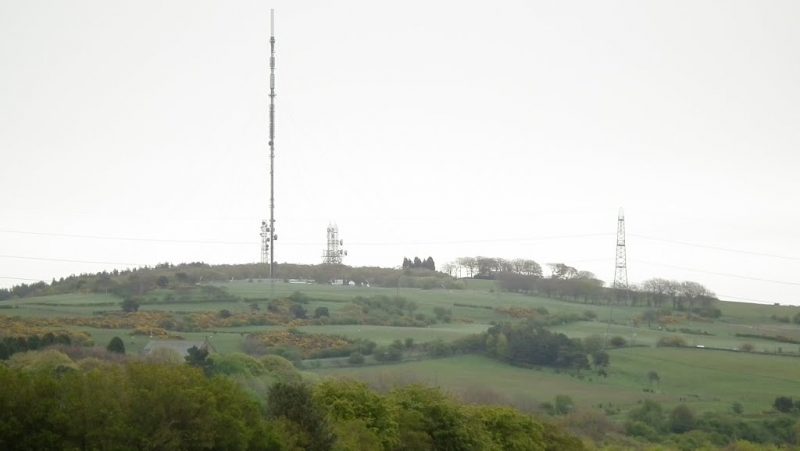
When settling down on their sofas to watch Queen Elizabeth II’s coronation live on 2nd June 1953, many residents of the North East would have had a hill to thank for the privilege. No, not Harry Hill or Benny Hill – we do actually mean a raised area of land. Well, more to the point –a transmitting station built on that hill and named after it. The hill in question is Pontop Pike, where the transmission mast still stands between the County Durham towns of Stanley and Consett.

In conventional circumstances, many people of the region in the early 1950s might have actually been denied the opportunity to watch that momentous coronation live at all. However, the mast’s construction was, on the BBC’s initiative, brought forward. Test transmissions only started on 20th April 1953 before the mast first transmitted programmes on 1st May, although this still allowed a comfortable amount of time before the coronation took place on 2nd June.

Today, the mast broadcasts digital television programmes to not only County Durham, but also the neighbouring Tyne and Wear and Tees Valley areas on either side, plus further-flung places like parts of Northumberland and North Yorkshire. The transmitter has not, however, been responsible for analogue television since 2012. At 149 metres (489 feet) high, the mast towers above Pontop Pike itself – which, despite its name having been used for Pontop Pike Park and Pontop Pike Farm in the local area, remains most strongly associated with its transmitting station.

Beamish Open Air Museum

Coal wagon at Beamish Museum entrance

Do you often visit Beamish Museum? We wouldn’t be at all surprised if you do. After all, it’s an amazing open-air museum that proves rewarding with repeat visits – and just one £19.99 ‘Unlimited Ticket’ allows you to make those visits for a year at no extra charge. However, in travelling to the museum, you may have often been struck by the sight of the large coal wagon that stands just outside the museum’s entrance. Yes, the wagon with ‘189’ on it…

Except that, well, that wagon isn’t actually no. 189; instead, it’s no. 389. Yes, it’s incorrectly numbered. That inaccurate numbering has been captured in many photographs over the years – including one in which the museum’s founding director, Frank Atkinson, is sat beside the wagon in 1987. However, as recorded in a Beamish Museum stock list, the wagon – of the 4T cauldron type – is no. 389 and was built in the 1870s for use on the Londonderry Railway.

Many other wagons of the same type and origin are on display – or even operational – in the museum’s colliery area. The mention of ‘Londonderry’ in that previously mentioned railway’s name isn’t primarily referring to the Northern Ireland city also known as Derry. Instead, it refers to the Londonderry family responsible for the 1850s development of this railway, which ran between Seaham and Sunderland and was owned by the Londonderry family until 1906. At that point, ownership passed to the North Eastern Railway company, which helped to develop the UK rail network.
Easy to Overlook Gems

King Coal, Pelton

The village of Pelton is, it would be fair to say, rather unassuming. Home to just over 8,000 people and lying a couple of miles northwest of Chester-le-Street, it might be best known by some people as the birth town of Alan White, the longtime drummer in progressive rock band Yes. However, it’s also where 19th-century trade union chief Thomas Hepburn was born in 1795 – and his upbringing as a coal miner begins to hint at why you should give Pelton a closer look.

Pelton even used to have its own train station, which was in operation for passengers from 1894 until 1955. Admittedly, it was Pelton’s train station largely just in name, being physically nearer the similarly-named village of Pelton Fell; besides, if you head to the site of the station today, you will see very little even suggesting that a station ever stood there.

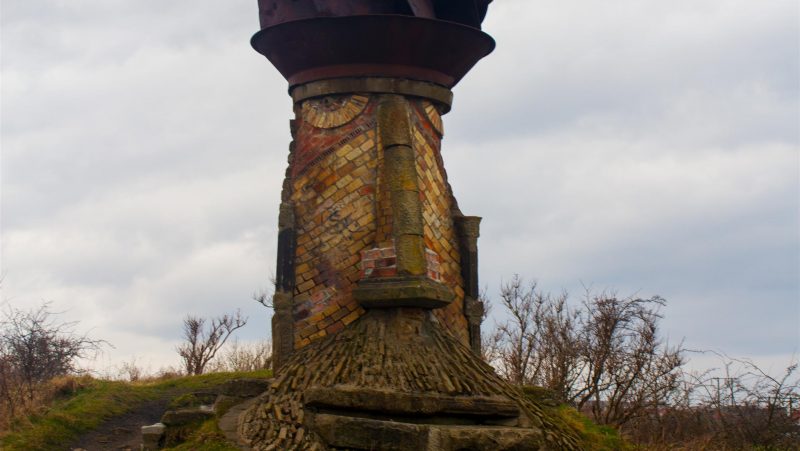
Nonetheless, if you journey towards the end of this site in the direction of South Pelaw, you could soon see… a giant head! That’s probably the best way of summarising its look, anyway; it’s a structure with an elaborate design akin to that of a head statue built by New Zealand’s indigenous Polynesian civilisation of the Māori. However, it is actually an art installation designed by the artist David Kemp.

A stonemason and local volunteers physically put together the structure, which comprises stone from a bridge that once crossed Consett railway station, itself – like the Pelton station – now long gone. The completion of King Coal was coincidentally reached on 15th October 1992 – the same day the closure of Durham’s few remaining coalfield pits was announced. We can’t help but think that, to this day, it makes a very fitting – and visually striking – tribute to the area’s coal-mining past.

Darlington Hippodrome

You might remember, last year, hearing or reading stories of a theatre called the Darlington Hippodrome opening to the public. However, this wasn’t a new theatre; it was, in fact, formerly Darlington Civic Theatre! It had closed in May 2016 for an extensive restoration project that cost £13.7m and lasted for 18 months.

The improvements to the theatre you may previously remember – and where you might even have seen some shows – include the addition of a three-storey glass atrium comprising the main entrance and box office. It’s now also possible to take lifts to all of the auditorium’s seating levels – and we wouldn’t be surprised to see those lifts heavily used, especially given that the capacity has been extended from 900 to over 1,000. This and a new fly system have made the venue suitable for bigger productions.

The project has also seen the restoration of the Edwardian auditorium – an especially endearing part of the venue that first opened in 1907, towards the end of King Edward VII’s reign. Back then, the theatre was actually called the New Hippodrome and Palace Theatre of Varieties – and, with its historical features now beautifully restored, the return of the “Hippodrome” reference to its name seems wonderfully appropriate.

ADVERTISERS