Category: Lifestyle

Ultra-fit North East lawyer wins a place in London Landmarks half-marathon to help raise funds for equality and access to justice

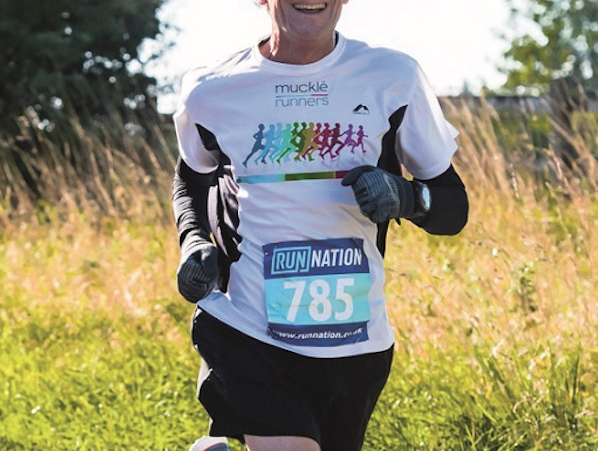
A leading North East lawyer has won a much sought after place in the new London Landmarks Half Marathon….in his continued quest to help raise awareness and much needed funds for the voluntary ‘pro bono’ work within the legal profession.

Hugh Welch took up running as a hobby 10 years ago and is senior partner at Newcastle based law firm Muckle LLP.

Already clocking up an impressive list of marathons and ultra-marathons on his journey so far, he has now been awarded one of ten exclusive national places made available by Advocate, which is the national charity finding free legal help from barristers.

He has now earned the right to compete alongside13,000 other runners in the world famous half-marathon, which takes place on 24th March 2019 and also takes in renowned landmark places through both the City of London and City of Westminster.

The race starts on Pall Mall and finishes by Downing Street and has fabulous views of London’s most iconic buildings including Big Ben, St Paul’s Cathedral, Nelson’s Column, the Gherkin, the Shard, the Tower of London and the London Eye and of course the Royal Courts of Justice in the Strand.

Speaking about his news, Hugh said: “This is such a privilege for me to be accepted and be given the opportunity to run in the London Landmarks Half Marathon. I took up running 10 years ago and run for fun, so this is a great opportunity for me to combine my love of running with fundraising for a cause that I really care about.

“I am passionate about equality and justice.  For me, access to justice is every bit as important within our society as access to education and healthcare.  It’s fundamentally wrong that people who can’t afford it are denied access to legal advice and to the court system.

“Also, like many other legal practices, our lawyers at Muckle are very active in doing pro bono work and we see this as a key part of our commitment to this region.

“I have been challenged to raise a minimum of £400 pounds in sponsorship money as part of my place in the half-marathon and this will be the first time I have asked friends, colleagues and clients to sponsor and help support my running,” he added.

Advocate encourages and facilitates voluntary work by lawyers and others working in the legal sector in their local communities.

Mary Dobson, Head of Fundraising and Communications, at Advocate said: “We are delighted to have chosen Hugh as one of our 10 participants to represent Advocate in this, the first year we’ve partnered with the London Landmarks Half Marathon.

“Last year Simon Gledhill of 3 Temple Gardens achieved a Guinness World Record for the fastest half marathon whilst wearing barrister robes. He’ll be running again in 2019, this time alongside Hugh to raise funds for our work.

“We are hoping our ten participants will raise thousands of pounds and much needed awareness for our work getting free legal help for really vulnerable people facing court alone in England and Wales.”

Advocate was founded as the Bar Pro Bono Unit by Lord Goldsmith QC in 1996. They are the only pro bono charity to provide legal assistance in every area of law in all courts and tribunals across England and Wales. They work with 4,000 volunteer barristers who donate their time and expertise to help people who cannot afford to pay for legal assistance and who are not eligible for legal aid. The Unit rebranded to become Advocate in October 2018, modernising their brand and service to become more accessible to as many people as possible and to help increase access to justice for all. Read more on their website https://weareadvocate.org.uk

Muckle LLP has a well-established charity and fund raising programme and actively encourages staff to become involved. Over 40% of its staff regularly volunteer for charities and the firm donates 1% of its annual profits to its charitable fund each year. To date, many communities and worthy causes across the North East have benefitted from over £500,000 in grants from the fund.

Hugh Welch has led the business in developing its award winning corporate social responsibility programme. Muckle is a five-time winner of the North East Business Heart of the Community Award (Tyneside and Northumberland) and won national recognition when it scooped ‘Best Contribution by a Firm with a Regional Head Office’ at the 2017 Law Works Pro Bono Awards.

To find out more about Hugh Welch’s half marathon fundraising drive, visit http://uk.virginmoneygiving.com/HughWelch

North East Optometrist’s invention set to have a national impact

Simon Berry, North East based Optometrist, has invented a simple, yet effective way to make eye tests less frightening and intimidating for those with learning difficulties.

Working with Durham University, Simon Berry has created the VFS (Visual Fixation System), which allows patients to watch a video while their eyes are being tested. For many children with learning difficulties, a trip to the opticians can be stressful, but this invention gives them a chance to watch their favourite video while having their eyes tested. The VFS works by splitting a beam of light reflecting the image from a phone to the patient, allowing the Optometrist to examine their eyes.

Simon Berry has been an Optometrist for over 20 years, having worked in a hospital paediatric clinic throughout his professional career. Over 16 years ago, he set up his own independent optometry practice in Gilesgate, Durham and he also works at Sunderland Eye Infirmary as a specialist Optometrist. This week, Berry appeared on BBC’s Look North discussing the success of the device and his plans to take it nationwide.

Berry sees a lot of children and adults with learning disabilities and keeping these patients engaged whilst trying to complete the various clinical measurements required can be challenging. The VFS was specifically designed for this reason. These are a very important patient as they have an increased risk of having eye problems, with one in ten having an eye disease and 40% will need glasses, a far higher percentage than the general population.

Simon has been working on the device for over three years and hopes it will help a wide range of patients. In particular, it has been used on Autistic patients who may find eye contact uncomfortable, as it hides the Optometrist’s face as they complete the test. It is also useful for young children and babies who find it hard to sit still, and he predicts it will be useful for patients with dementia, too.

The initial prototype was made in collaboration with Durham University and the technology is now licensed to Optimec, a UK company based in Malvern, specialising in the design and manufacture of optically based instrumentation and devices. The VFS is already an invaluable aid in helping examine children and patients with a learning disability in his own practice, since its launch in September. The product is now being tested by Optical Specialists around the UK.

Great Ormond Street Hospital has expressed interest in the device and it is currently being trialled by Aston University, Cardiff University, ABDO (Association of British Dispensing Opticians), and SeeAbility (a national charity). Berry hopes it will be used by Optometrist’s nationwide.

To find out more about Simon Berry’s Visual Fixation System, call their office on 0191 375 7544.

Easy to Overlook Gems

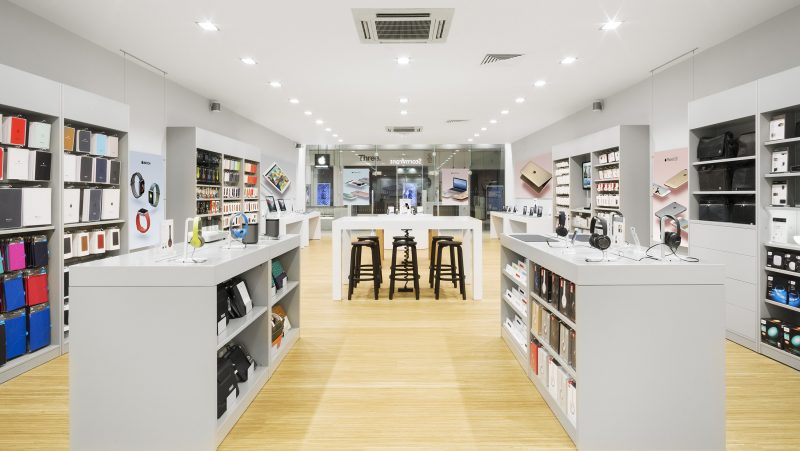
Apple reseller Stormfront’s Durham store

Not only is Apple the world’s most valuable company by market capitalisation, but it’s also one of the companies that attracts the strongest loyalty in customers. If you own Apple devices already, you might be excited about buying some others that have recently hit the market – like the PRODUCT(RED) iPhone 8 and 8 Plus, updated 9.7-inch iPad and power-packed iMac Pro.

If you fancy giving any of these devices a test run, you don’t necessarily have to journey to one of Apple’s own retail stores in Newcastle’s Eldon Square or Gateshead’s Metrocentre to do so. Durham’s Silver Street is home to a store of one of Apple’s premium resellers, the national retail chain Stormfront. This store offers many of the same benefits as an official Apple bricks-and-mortar outlet…

For example, you can experiment with a range of demonstration units of recently-released Apple gadgets. Employees at the store can give you specialist advice about these products – and if you have previously bought an Apple device that has broken but remains eligible for repair under warranty, Stormfront is authorised to carry out such repair for you.

Especially excitingly, when you purchase a new Apple device here, Stormfront will provide a three-year guarantee with it. That’s two years longer than the standard warranty provided by Apple; hence, you’ve got an extra-special reason to source your Apple supplies from this place rather than one of Apple’s own stores slightly further up north. We can already hear you cry: “iLove it!”

Queen Elizabeth Sixth Form College, Darlington

You would expect an educational institution named after Tudor monarch Queen Elizabeth I to have a history going back centuries – and indeed, this particular college does. Well, to an extent. As a sixth form college, QE – as this establishment is commonly called – wasn’t founded until 1970. However, before this milestone, it was a boys’ school known as Queen Elizabeth Grammar School.

In June 1563, Queen Elizabeth I granted the Royal Charter for the school’s formation. James Pilkington, Bishop of Durham and Henry Neville, Earl of Westmorland were both instrumental in petitioning for this charter. Historical evidence suggests that, while a grammar school might have been attached to St Cuthbert’s Church since the early 13th century, it was both physically and financially beleaguered by the time Pilkington and Neville took the initiative with their petition.

Just over three centuries later, the school moved into its current building, an iconic structure designed by the esteemed architect George Gordon Hoskins, whose other works included the similarly Gothic-looking Middlesbrough Town Hall. The QE building, which can still be seen on Vane Terrace in Darlington, even includes a stone depiction of Elizabeth herself above the main entrance.

Today, QE has approximately 2,000 students in the 16 to 18 age bracket. The college’s academic reputation is stellar, while its alumni include Stockton North MP Alex Cunningham and Theo Hutchcraft of synthpop duo Hurts. We can’t help but think that the Faerie Queene herself would be impressed with how her namesake institution has flourished in the centuries since her reign.

You’ve got a particularly great reason to smile in May – it’s National Smile Month!

It’s so easy for many of us to underestimate just how important a healthy smile is. Of course, you need good teeth for the simple practical reason that they help you to chew and digest food, but it’s easy to forget that they also assist the act of talking and give your face its shape.

Quite frankly, your oral health is something that you should be smiling, rather than frowning about. That’s precisely why National Smile Month is so important, with the annual campaign by the Oral Health Foundation running this year from 14th May to 14th June.

It’s come a long way…

You might initially wonder why we need a National Smile Month, especially these days. After all, don’t most of us look after our teeth and mouths fairly well?

Alas, even today, that’s often not the case. There are still too many of us who continually forget to brush our teeth twice a day, or who too frequently spend less than two minutes brushing. We’ve also seen our diets become overly reliant on added sugars, and millions of us haven’t even seen a dentist in the last two years.

When you also consider that back in 1977 – when the forerunner to National Smile Month, the week-long ‘Smile 77’ project was held – only one in three people had their natural teeth, you can probably begin to appreciate just how crucial a role the event has long played in educating Britons about their oral health.

So… how can you look after your mouth better?

There are a lot of things that you can do to help to ensure the best possible oral health. You’ll find a more comprehensive list on the National Smile Month website at nationalsmilemonth.org, but here are a few to be getting on with…

  • Brushing your teeth last thing at night and at least one other time during the day with a fluoride toothpaste
  • Cleaning in-between your teeth at least once a day using interdental brushes or floss
  • Visiting your dentist regularly, or as often as they recommend
  • Chewing sugar-free gum after eating or drinking, especially sugary foods
  • Following a varied diet rich in vitamins, minerals, fresh fruit and vegetables
  • Avoiding snacking and only having sugary foods and drinks at mealtimes
  • Changing your toothbrush every two to three months or sooner
  • Quitting smoking

Plenty of events are also taking place during the month

Every National Smile Month, supporters and organisers hold all manner of events in a varied range of settings – including dental practices, hospitals, pharmacies, retailers and even just out on the street – to spread the message of how to maintain optimum oral health.

With the likes of Smileathons, Two Minute Challenges, school visits and much more taking place over the month, there’s a lot to get excited about – and you can find out more about it all by visiting www.nationalsmilemonth.org.

However you choose to celebrate National Smile Month, always remember to keep smiling!


Easy to Overlook Gems

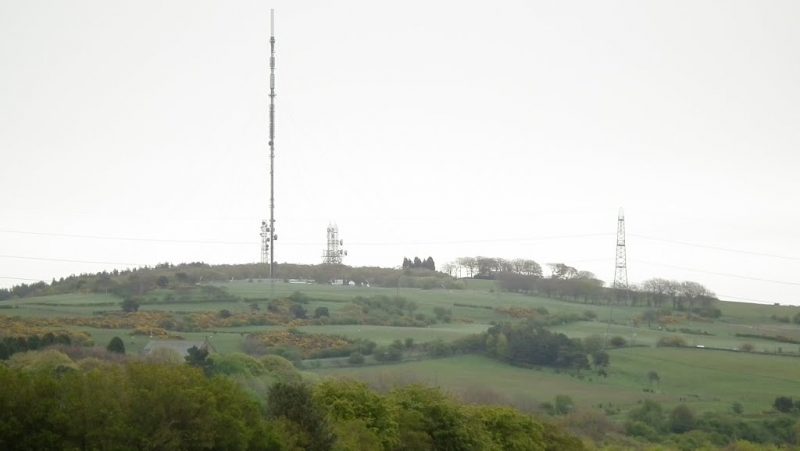
Pontop Pike

When settling down on their sofas to watch Queen Elizabeth II’s coronation live on 2nd June 1953, many residents of the North East would have had a hill to thank for the privilege. No, not Harry Hill or Benny Hill – we do actually mean a raised area of land. Well, more to the point –a transmitting station built on that hill and named after it. The hill in question is Pontop Pike, where the transmission mast still stands between the County Durham towns of Stanley and Consett.

In conventional circumstances, many people of the region in the early 1950s might have actually been denied the opportunity to watch that momentous coronation live at all. However, the mast’s construction was, on the BBC’s initiative, brought forward. Test transmissions only started on 20th April 1953 before the mast first transmitted programmes on 1st May, although this still allowed a comfortable amount of time before the coronation took place on 2nd June.

Today, the mast broadcasts digital television programmes to not only County Durham, but also the neighbouring Tyne and Wear and Tees Valley areas on either side, plus further-flung places like parts of Northumberland and North Yorkshire. The transmitter has not, however, been responsible for analogue television since 2012. At 149 metres (489 feet) high, the mast towers above Pontop Pike itself – which, despite its name having been used for Pontop Pike Park and Pontop Pike Farm in the local area, remains most strongly associated with its transmitting station.

Beamish Open Air Museum

Coal wagon at Beamish Museum entrance

Do you often visit Beamish Museum? We wouldn’t be at all surprised if you do. After all, it’s an amazing open-air museum that proves rewarding with repeat visits – and just one £19.99 ‘Unlimited Ticket’ allows you to make those visits for a year at no extra charge. However, in travelling to the museum, you may have often been struck by the sight of the large coal wagon that stands just outside the museum’s entrance. Yes, the wagon with ‘189’ on it…

Except that, well, that wagon isn’t actually no. 189; instead, it’s no. 389. Yes, it’s incorrectly numbered. That inaccurate numbering has been captured in many photographs over the years – including one in which the museum’s founding director, Frank Atkinson, is sat beside the wagon in 1987. However, as recorded in a Beamish Museum stock list, the wagon – of the 4T cauldron type – is no. 389 and was built in the 1870s for use on the Londonderry Railway.

Many other wagons of the same type and origin are on display – or even operational – in the museum’s colliery area. The mention of ‘Londonderry’ in that previously mentioned railway’s name isn’t primarily referring to the Northern Ireland city also known as Derry. Instead, it refers to the Londonderry family responsible for the 1850s development of this railway, which ran between Seaham and Sunderland and was owned by the Londonderry family until 1906. At that point, ownership passed to the North Eastern Railway company, which helped to develop the UK rail network.

It’s time for one of the unexpectedly tasty highlights of 2018 – British Sandwich Week!

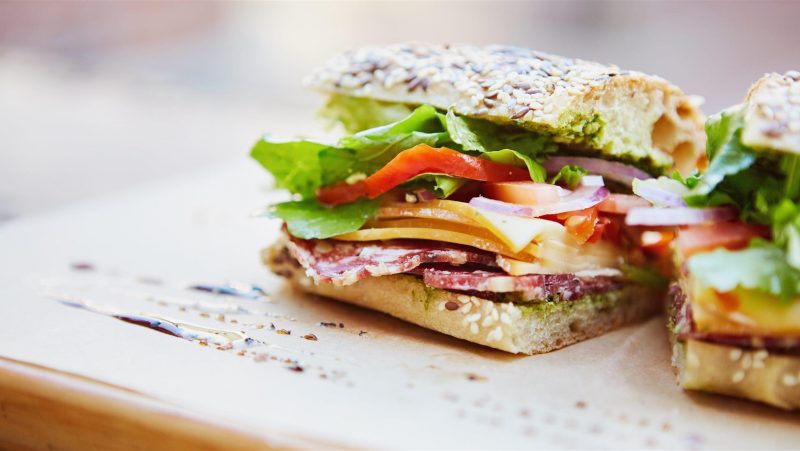
Ah… the humble British sarnie. The very fact that we all casually call it a ‘sarnie’ – or ‘buttie’, ‘barm’, ‘bap’ or all manner of other names – goes to show how much this distinctly European culinary invention has entrenched itself into everyday British culture.

There are also a lot of fascinating things that you might not know about sandwiches. You might not have been aware, for example, that about 57% of all commercially bought sandwiches are made with traditional square sandwich bread, or that more than 3,500,000,000 sandwiches are bought from UK retail or catering outlets every year.

Over 300,000 people are also employed in the UK sandwich industry, which gets at the nub of what this article is really about – British Sandwich Week. Yes, there is such a thing, and it takes place this year from Sunday 20th to Saturday 26th May 2018.

So, what’s British Sandwich Week about?

It’s exactly what it sounds like – a week-long celebration of surely the greatest ‘food to go’ ever invented, organised by The British Sandwich & Food to Go Association.

At a time when consumers have so much choice and might well be tempted to purchase something other than a sandwich for their lunch, it’s nice to know there’s a week dedicated to this simple and traditional pleasure (including for many of us here at IN&AROUND).

What that means for you, the consumer, is that you can expect many sandwich retailers near you to offer special promotions and ranges during the week. Several will also be drumming up their association with charity, such as by donating some of their proceeds or even advertising ‘buy one, donate one’ initiatives to get customers involved.

All of the events you’d expect from a very special week

As you might imagine, various events are customarily held to mark what is a key week in the British culinary calendar. These include what are known rather wittily as ‘The Sammies’ – The British Sandwich Industry Awards – which are open to everyone involved in the sandwich industry.

With the range of gongs to be handed out including the likes of The Sandwich Industry Award, The Independent Sandwich Retailer Award, The En-Route Sandwich Retailer Award and The Sandwich Convenience Retailer Award, it’s fair to say that this year’s black-tie event at the Lancaster London Hotel in Hyde Park will be eagerly anticipated and well-attended.

As if all of that wasn’t enough, British Sandwich Week also sees the grand final of what is surely one of the most important competitions in the world if you’re a sandwich enthusiast: the British Sandwich Designer of the Year Award.

This is a competition open to sandwich designers from across the UK, with those working in a sandwich bar, catering or manufacturing environments alike duking it out for the honour of being declared the Overall Sandwich Designer of the Year. Oh, and the winner also gets a cheque for £5,000.

Phew, we bet you never realised sandwiches could be so exciting! Make sure you don’t miss out on the festivities of this very special week, or if you can’t do that, at least take the time to eat a sandwich or two this month to celebrate this evergreen British food classic.


Easy to Overlook Gems

King Coal, Pelton

The village of Pelton is, it would be fair to say, rather unassuming. Home to just over 8,000 people and lying a couple of miles northwest of Chester-le-Street, it might be best known by some people as the birth town of Alan White, the longtime drummer in progressive rock band Yes. However, it’s also where 19th-century trade union chief Thomas Hepburn was born in 1795 – and his upbringing as a coal miner begins to hint at why you should give Pelton a closer look.

Pelton even used to have its own train station, which was in operation for passengers from 1894 until 1955. Admittedly, it was Pelton’s train station largely just in name, being physically nearer the similarly-named village of Pelton Fell; besides, if you head to the site of the station today, you will see very little even suggesting that a station ever stood there.

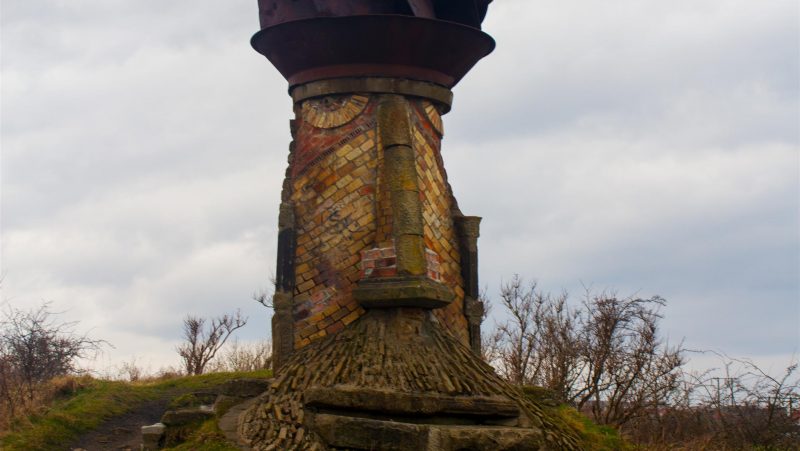
Nonetheless, if you journey towards the end of this site in the direction of South Pelaw, you could soon see… a giant head! That’s probably the best way of summarising its look, anyway; it’s a structure with an elaborate design akin to that of a head statue built by New Zealand’s indigenous Polynesian civilisation of the Māori. However, it is actually an art installation designed by the artist David Kemp.

A stonemason and local volunteers physically put together the structure, which comprises stone from a bridge that once crossed Consett railway station, itself – like the Pelton station – now long gone. The completion of King Coal was coincidentally reached on 15th October 1992 – the same day the closure of Durham’s few remaining coalfield pits was announced. We can’t help but think that, to this day, it makes a very fitting – and visually striking – tribute to the area’s coal-mining past.

Darlington Hippodrome

You might remember, last year, hearing or reading stories of a theatre called the Darlington Hippodrome opening to the public. However, this wasn’t a new theatre; it was, in fact, formerly Darlington Civic Theatre! It had closed in May 2016 for an extensive restoration project that cost £13.7m and lasted for 18 months.

The improvements to the theatre you may previously remember – and where you might even have seen some shows – include the addition of a three-storey glass atrium comprising the main entrance and box office. It’s now also possible to take lifts to all of the auditorium’s seating levels – and we wouldn’t be surprised to see those lifts heavily used, especially given that the capacity has been extended from 900 to over 1,000. This and a new fly system have made the venue suitable for bigger productions.

The project has also seen the restoration of the Edwardian auditorium – an especially endearing part of the venue that first opened in 1907, towards the end of King Edward VII’s reign. Back then, the theatre was actually called the New Hippodrome and Palace Theatre of Varieties – and, with its historical features now beautifully restored, the return of the “Hippodrome” reference to its name seems wonderfully appropriate.

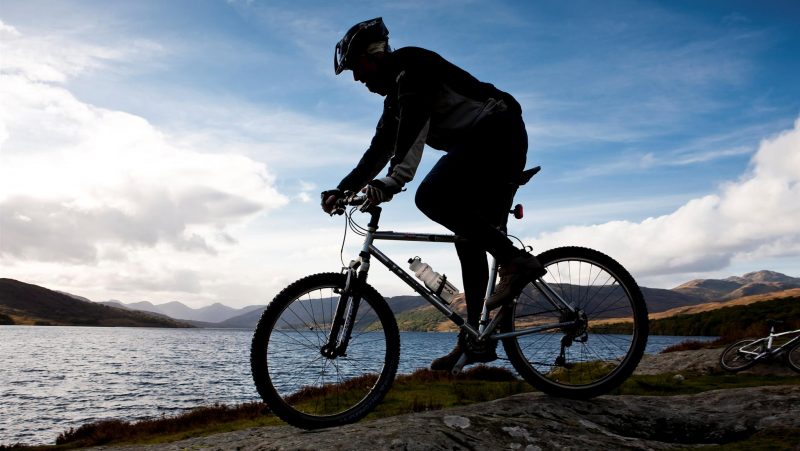
On your bike! Enjoy the local area on two wheels

We certainly live in a stunning part of the country; County Durham has no shortage of rural beauty and awesome architecture, and that’s before we even stop to consider that the area is sandwiched between Tyneside and Yorkshire, which have plenty of great attractions of their own.

However, what you might not have so readily realised is that getting around such places can be much more hassle-free on a bike. Here are some especially good reasons to take up cycling…

It’s a route! Where you can cycle in County Durham

Key to the appeal of cycling in County Durham is the wide choice of routes that you can take while on your bike. Although we don’t have the space to list them all here, we would eagerly single out the 100-mile Teesdale Way – along the River Tees from source to sea – and Link up the Loops, a largely off-road route running for 25 miles between Consett and Chester-le-Street.

If you fancy cycling beyond our county’s borders, we also recommend the C2C Cycle Route, so-called as it can take you from “sea to sea” – from Whitehaven or Workington on the Cumbrian coast, right through to Sunderland on the eastern coast. This is one of the UK’s most popular cycle routes.

Smash fit: get into better shape by cycling

You can also squeeze cycling into more routine aspects of your life, like getting to and from work – and to say that it can make you fitter would be putting it mildly.

In the United States, the National Forum for Coronary Heart Disease Foundation says that cycling regularly can give you the fitness level of a person a decade younger.

Don’t skip a proper equip: useful items for cycling

Obviously, before you can start cycling, you will need a bike. Any good working one will suffice for short journeys; however, if you want to use an old or second-hand bike, consider getting it serviced for roadworthiness first. You will also need a helmet for your own safety.

You could also invest in some good padded shorts to prevent an aching backside, while you can protect your eyes from bugs and stones if you wear sports glasses while riding.

Gym, be the best: if you can’t cycle outdoors

There might be occasions when you don’t want to cycle outdoors; for example, because the weather looks too brutal. However, gym classes of various forms can benefit cyclists.

Those forms include spinning, where you would cycle on fixed gear bikes. You also shouldn’t rule out traditional boxing exercises; they can exercise the upper body that can be neglected during cycling.

York in the road: eagerly anticipating the Tour de Yorkshire

Do you love watching others cycling? This year’s Tour de Yorkshire runs from Thursday 3rd May until Sunday 6th May. While this cycling race competition only started in 2015, last year’s event drew an estimated 9.7 million broadcast viewers, while more than 2 million spectators lined the route. Leeds, Scarborough, Doncaster and Barnsley are among the places the cyclists will visit this year.

Easy to Overlook Gems

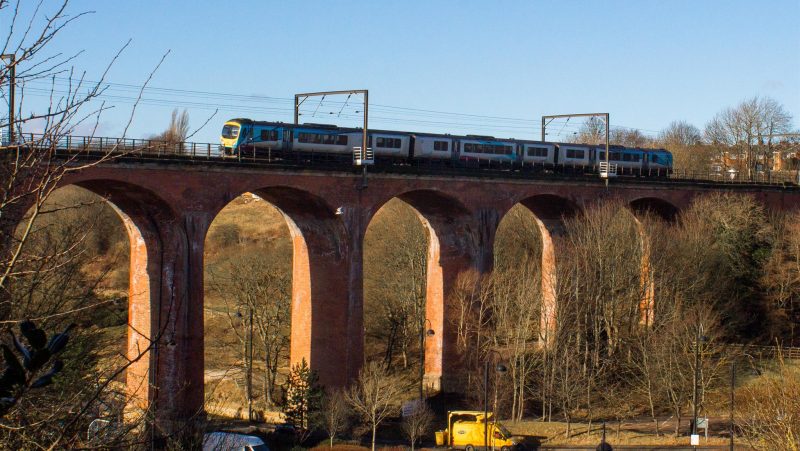
Chester Burn viaduct, Chester-le-Street

There are undoubtedly some stunning sights that you can enjoy from a train on the East Coast Main Line that runs all the way between London and Edinburgh. In County Durham alone, those sights include the elaborate-looking railway station in Darlington, the beautiful Durham Cathedral, and much of Chester-le-Street from the railway viaduct known as Chester Burn viaduct.

The viaduct’s amazing length – spanning a total of 750 feet – and height of 90 feet afford train passengers plenty of opportunity to see Chester-le-Street’s amenities, including the town’s Tesco superstore. However, the viaduct – a Grade II listed structure – is also worthy of admiration for its own appearance, which is perhaps best appreciated from the ground of Chester Burn.

This viaduct was built in the 1860s and opened in 1868, accepting freight trains on 2nd March and passengers on 1st December. To this day, the structure still consists of its original stone and bricks, including red engineering bricks, although the western part has been somewhat resurfaced. The listing does not apply to railings and refuges added after the original construction.

At the time of that construction, Chester Burn was a bustling place with both residential and industrial buildings. These days, the same area is perhaps best known for its market, which takes place every Saturday, and the previously mentioned Tesco superstore. So, it’s still a busy area, although not quite in the same way as local residents during the late 19th century would have known.

The Waiting Room, Eaglescliffe

If you’ve ever prepared to catch a train at the lovely little town of Eaglescliffe, you might have considered waiting for your train at… The Waiting Room. There’s a very good reason why we have capitalised those words: they form the name of an award-winning vegetarian restaurant that is not only conveniently close to the railway station, but also enticing in its culinary offerings.

Upon walking into the restaurant for the first time, you could be struck by its friendly and bohemian feel – whether you favour eating in the airy and elegant front room or more vivid conservatory back room. However, to use a fitting pun, the proof of the pudding is in the eating; the restaurant regularly serves up succulent dishes comprising slow cooked vegetables and organic dairy. The food can go down well with the offered beverages, which include all-organic wines and beers.

There have already been plenty of plaudits for The Waiting Room. This eatery has been, in numerous recent years, a runner-up in The Observer’s Best UK Restaurant category, while the Vegetarian Society has handed its “Best Restaurant in The UK” accolade to this dining spot. The BBC Good Food magazine has hailed The Waiting Room “a wonderful little restaurant selling great food”.

One of our own favourite aspects of The Waiting Room is the live music and arts events it regularly hosts in its back room on Sunday evenings. Big name comedians who have played this venue include John Bishop, Stewart Lee, Josie Long and Viz co-founder Simon Donald – yes, really!

Responding To Poverty

Councillors will hear about the continuing work to respond to tackling poverty across County Durham when they meet next week.

Members of Durham County Council’s Cabinet will hear about the work of the authority and its partners to help those affected through changes made as a result of the Government’s welfare reform programme and the challenges of continuing austerity.

More work is planned through an in-depth study into child poverty to further develop understanding of the issue in County Durham.

Councillors will be asked to give the go-ahead for the research to help develop further approaches to tackling poverty when they meet at the Glebe Centre, Murton, on Wednesday, 18 January.

Cllr Lucy Hovvels, Durham County Council’s Cabinet member for adult and health services, said: “Poverty can affect every area of a child’s development – social, educational and personal.

“Living in a poor household can reduce children’s expectations of their own lives and lead to a cycle where poverty is repeated from generation to generation.

“If we want to give children the best start in life, we need to target everything from health, education and employment to behaviour, finance, family and personal relationships.

“In order to do this, we need to carry out detailed analysis of the issue and come to a better understanding of how it affects the lives of families in County Durham.”

If it goes ahead, the research would include mapping service provision across the county in order to identify where new approaches and interventions are needed.

Furthermore, it is proposed that the council will continue its work as a member of the North East Child Poverty and also take up the opportunity to work with the North East Child Poverty Commission.

The report also highlights the pressure within the Discretionary Housing Payments budget in 2016/17 due to increasing demand for support from residents struggling with housing payment demands.

ADVERTISERS