Tag: alex nelson

Alex Nelson’s Places To Go: Bishop Auckland

Stationmaster Alex Nelson has been suggesting places to go by train every month for ten years. This month, he’s headed to Bishop Auckland…

Great things are afoot in Bishop Auckland!

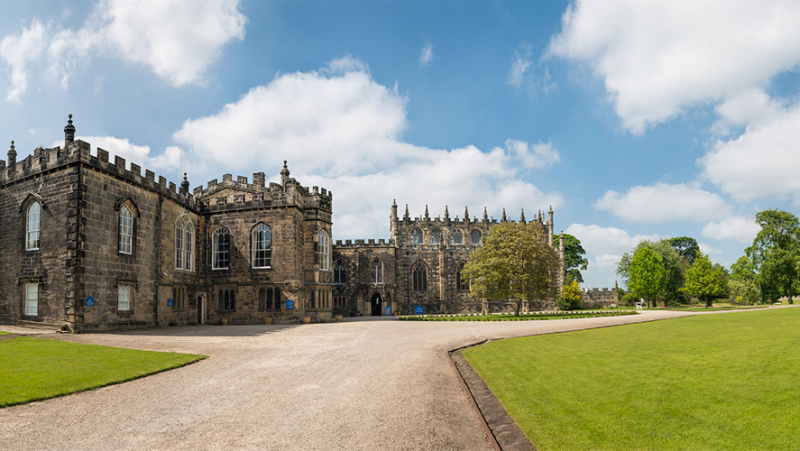
Last year I spent an hour with Jonathan Ruffer, the visionary wealth manager and barrister who bought the 13 paintings of Jacob and his Twelve Sons in Auckland Castle from the Church Commissioners, and then bought the Castle to keep them in. The Castle and tearooms have been closed for winter maintenance during January, but are now back open. Throughout the year, they are open every day except Tuesdays, and the admission is £6 for adults, free for under 16s.

Auckland Castle offers guided tours at 11.30 and 14.30 every day (no extra charge), excluding Tuesdays, where you can see the splendid rooms and vistas, as well as the paintings by Francisco de Zurburan (1598-1664). There are other events throughout the year (details on the website), including the popular Bishop Auckland Food Festival, which this year is on 23rd/24th April. A walk in the park costs nothing, although you might get your shoes rather muddy, so take boots. The Deer Shelter is in the care of English Heritage, but there is no charge to walk round it.

Ten trains a day run to Bishop Auckland, which is a branch from the main line at Darlington. So to get there, head for Darlington first. A visit to Bishop Auckland can easily be combined with a free visit to Locomotion, the branch of the National Railway Museum. On arrival at Bishop Auckland, walk up Newgate Street, which is the straight shopping street heading north to the Market Place, and turn right for Auckland Castle where the Bishop of Durham still has an office (although he lives elsewhere in the town).

It takes about 15 minutes to walk to the Castle, which is the focal point of a one-man effort to regenerate a whole town. Even the mediocre old Postchaise and Queen’s Head hotels are being remodelled to create one single mid-market boutique hotel. Already there are 30,000 visitors a year now, compared to 800 when the Bishops were in residence.

Jonathan Ruffer said to me: “I don’t want it to be interesting. I want it to be astonishing.”

This summer, there’s something really astonishing: an epic production on the land to the north of the Castle called KYNREN, the epic story of England, covering 2,000 years on a 7.5 acre stage including a large lake, and 1,000 performers and crew. The scale is truly breathtaking. I saw progress on the site even during my hour with Mr. Ruffer. KYNREN will be performed on 14 occasions over the summer of 2016, starting from Saturday 2nd July until Saturday 17th September. It’s on various Fridays, Saturdays and one Sunday (28th August), and tickets are available now. This is a live action night show that starts as late as 21.30 and finishes 90 minutes later. If you think ‘2012 Olympics Opening Ceremony’, you’ll be thinking along the right lines.

In other news…

Keep the date: Sunday 13th March!

I’m organising a mass visit by train to Teesside Airport station, to ensure it is not the least used station on the National Rail network in 2015/16. The only train of the week leaves Darlington station at 11.05, and you can spend just over an hour at the airport before joining the only train back at 12.35. For one of the weirdest excursions of the year, suitable for children, led by an experienced team… full details soon!

Alex Nelson
Stationmaster
Alex Nelson’s Places To Go: Darlington

Stationmaster Alex Nelson has been suggesting places to go by train every month for ten years. This month, he’s headed to Darlington…


Over the past few decades, County Durham has been getting smaller. First of all, the county lost Gateshead, South Tyneside, Sunderland, Stockton and Hartlepool in 1974, followed by Darlington when it became a unitary authority in 1997.

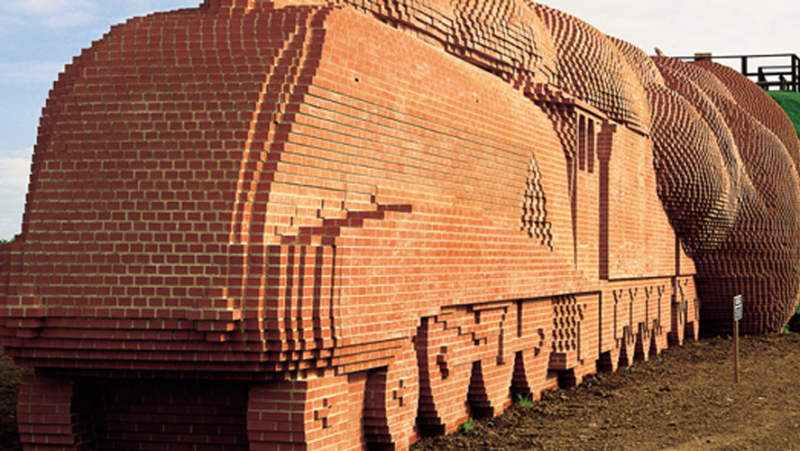
With its population of over 100,000, Darlington is a town famous for many reasons, not least for the world’s first locomotive hauled railway service (from Stockton to Darlington) founded by Edward Pease and his business associates.

The company initially provided only the track, which was hired out to whoever wished to run a train, hauled either by horses or by steam. The transition to standard railway management was a gradual one, spurred on by frequent disputes between drivers over right of way, and by the dangers of the higher speeds of steam locomotives.

The town does have its own railway museum, but it’s been several years since I’ve visited, as opening hours are much reduced. This isn’t at the main Darlington station, sometimes known as Bank Top, but at the original station at North Road, a 20 minute walk north of the town. It’s the first stop on the branch to Bishop Auckland, which runs infrequently, but stops alongside the museum and the shed where the iconic new steam locomotive 60163 Tornado was built in 2008.

North Road Station Museum is known as the Head of Steam, and is open Wednesday to Sunday, 11am-3.30pm. There is an admission charge of £4.95, with reductions for concessions and children. The big problem it faces, however, is that despite being a very interesting museum and incorporating the fascinating Ken Hoole Study Centre, it is dwarfed by the National Railway Museum off-shoot at Shildon, just up the line, which is much larger and benefits from free admission.

The Shildon museum is where people tend to gravitate, but on a day trip to Darlington, it’s well worth a visit to the original.


The town centre contains many interesting alleyways (or vennels), particularly between the High Street and Skinnergate, which runs parallel to the west, away from the railway station. There are many independent shops and specialist cafes on these vennels.

My wife and I enjoy many of the shows at the Darlington Civic Theatre, which is a more intimate performance space than the likes of the Sunderland Empire or Theatre Royal in Newcastle. The theatre is also close to the railway station for a ride home afterwards, but requires careful planning of train times if you’re to avoid a long wait after the show.

Darlington is also an excellent place to change trains, having a flat floor plan with no bridges or subways between platforms. Watch the indicators, though! Whilst southbound trains routinely leave from Platform 1, northbound from Platform 4, and locals to Middlesbrough/Saltburn from Platform 2/3, these are prone to swap around from time to time.

I learned this the hard way when I foolishly directed a lady on her way to Whitby (via Middlesbrough) to wait with me on Platform 1 whilst her train gently slid out of Platform 4… and it was her last connection. I wrote an apology in the Whitby Gazette and it won Letter of the Week, but the memory still fills me with dread.

On the railway, I’m supposed to know what I’m doing…

Alex Nelson


[cwa id=’test’]

ADVERTISERS