Tag: film review

The House with the Clocks in its walls

Our rating: ***

This is a spine tingling tale that’s perfect for Halloween so we were a little surprised to see it earlier in the UK.

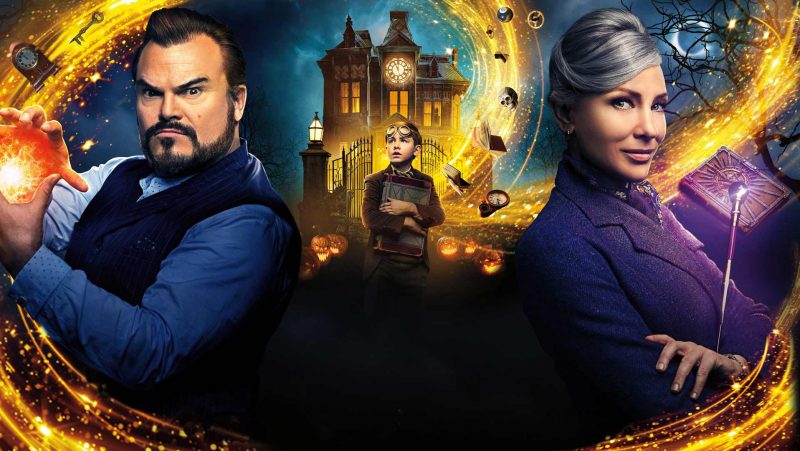
It’s the magical tale of a 10 year old boy called Lewis (Owen Vaccaro) who goes to live with his mysterious uncle (Jack Black) in a creaky old house with a mysterious tick-tocking heart.  Everything looks normal and welcoming in the sleepy town at first but this façade burst into pieces with a secret hidden world of witches and warlocks when Lewis accidentally awakens the dead.

Directed by Eli Roth who is better known for more adult horror movies such as Cabin Fever and Hostel, he expectedly tones down the gore but not the suspense in his first PG rated movie.

Lewis’s Uncle Jonathan is revealed as a Warlock with good intentions but average powers. His next door neighbor Florence (Cate Blanchett) spends so much time at the house they are forced to deny they are more than good friends – although the more alarming revelation should be that she’s actually a witch.

Uncle Jonathan let’s Lewis have the run of the house, can eat cookies for dinner and go to bed when he likes. The only rule is he is not to open the scary-looking cabinet on the main floor, so you’ll never guess what happens next…

The film is set in 1955 and the period detail is amazing. Eventually Lewis finds out what is happening and persuades his Uncle to teach him some spells and incantations. The sinister clock keeps ticking away and Lewis starts to see the ghost of his departed mother but these moments are more gentle scares than full on BOO! Jump scares.

There are enough unnerving moments in the movie to call it a comedy thriller and enough moments of actual drama and character development for adults to enjoy the movie and be invested in the characters. There are some scary moments when sensitive children should look away but ultimately bad guys get their comeuppance, good guys get their reward and if you are a fan of the early Harry Potter movies then you will absolutely love this.

There aren’t many kid friendly movies to introduce them to the concept of horror and danger but The House With a Clock in its Walls is the perfect bridge between them too, balancing the peril with fun.
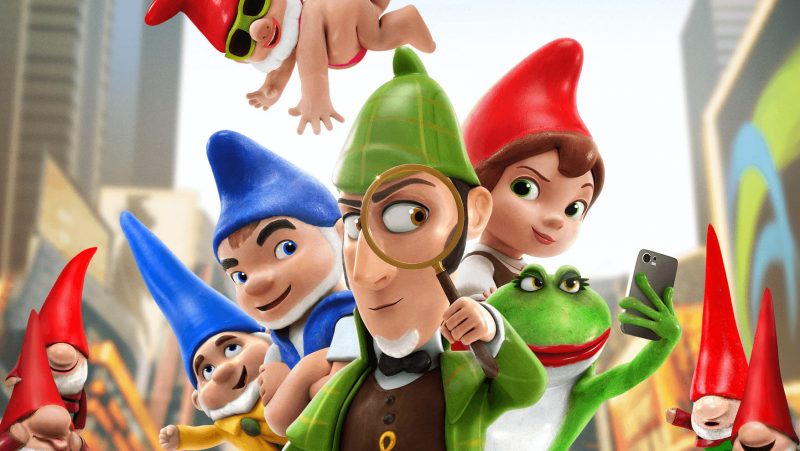
 

REVIEW: Sherlock Gnomes

Rating: **

While the 2011 computer-animated film Gnomeo & Juliet wasn’t the most revolutionary take on that William Shakespeare play, it was also far from a shambles. In fact, it was rather cute and endearing. James McAvoy and Emily Blunt had an easy chemistry as the two eponymous leads, gnomes who enjoyed an illicit love affair despite belonging to rival gnome gangs busily scheming on opposite sides of a garden fence. Nonetheless, how many of us really clamoured for a sequel?

In any case, we’ve ended up getting one – and with both Gnomeo and Juliet and their familiar voice actors back, it probably wouldn’t be a spoiler for us to say that, in the first film, they didn’t meet the grisly fates of their Shakespearean counterparts. However, after relocating from Stratford-upon-Avon to London, they have suffered a rupture in their previously harmonious relationship.

The culprit? The new garden; by the disgruntled Gnomeo’s reckoning, Juliet is unjustly paying more attention to it than to him. Cue many scenes of Gnomeo being uncharacteristically petulant and bickering insistently with his porcelain paramour. This tension is dramatically shattered like terracotta when the couple return to the garden after time away and realise that all of their gnome co-inhabitants have gone. Who better to investigate the mysterious disappearances than Sherlock?

Yes, it’s a gnome version of Sherlock – a pompous git called Sherlock Gnomes – that we’re talking about here. That Johnny Depp provides the voice is puzzling; the American brings little to the role except a plummy British accent that a home-grown actor surely could have delivered just as well. Sherlock clashes with his sidekick Watson, voiced by Chiwetel Ejiofor, and jilted ex-fiancée Irene, who serves scant purpose here besides letting her voice actress Mary J Blige sing an all-new song.

The first film had quite a few clever little touches, like Shakespeare himself as a talking statue and the snarling menace Tybalt depicted in a more sanitised light. However, the sequel is largely shorn of such creativity. Perhaps the closest it gets is with Moriarty, Sherlock’s arch nemesis. Here, he resembles a small, yellow version of the ‘Stay Puft’ man from Ghostbusters – and is played deliriously by Jamie Demetriou, who gives a voice reminiscent of a creepily demented Alan Carr.

All the same, the first film’s touching love story provided a soft centre that is sorely lacking this time around, given the near-relentless snappy exchanges between the characters. Meanwhile, broadening the scenery to London’s busy streets makes for a wild goose chase bringing to mind too many other, better films. An unexpectedly stunning climax centred on Tower Bridge does slightly make up for it, but still leaves us with a Toy Story wannabe that is little to write gnome about.

Film review: Ready Player One

Rating: ****

What do you expect the world to be like in 2045? You might imagine, given the pretty dystopian terms in which we already speak of the years ahead, that it might be pretty badly beaten-up.

However, the two seemingly cataclysmic events merely referred-to in passing in Ready Player One – the “corn syrup droughts” and the “bandwidth riots” – might not have been the causes you’d imagined.

Escaping the slums of mid-21st century Ohio

Anyway, imagine that in the intervening time, Ohio’s state capital and most populous city – Columbus – has been rendered a grim favela of trailers mounted on top of each other, a world in which the drudgery of the slums drives the remaining citizens to hook themselves on escapism.

Such escapism is provided by the alternate wholly virtual reality world known as the Oasis, in which most of the population live their lives, generally play-acting and mashing together favourite elements of 20th-century pop culture.

Those references, by the way, are truly teeming, encompassing everything from King Kong, the Tyrannosaurus rex from Jurassic Park and Marty McFly’s Back to the Future DeLorean to a soundtrack covering such ‘70s and ‘80s touchstones as George Michael’s “Faith” and Prince’s “I Wanna Be Your Lover”.

A high-octane chase for the keys to the Oasis

The heavyweight-of-all-heavyweights reputation of producer and director Steven Spielberg was undoubtedly instrumental in securing the necessary rights for the scores of references to films, television shows, movies and other media littered throughout Ready Player One, which is based on Ernest Cline’s 2011 novel of the same name.

It’s a suitably Spielbergian cast, too, headed by Tye Sheridan, who plays Wade Watts, very much the kind of determined, single-minded male lead to whom we have become accustomed across the director’s epics ranging from E.T. – The Extra Terrestrial (Henry Thomas) to Indiana Jones (Harrison Ford).

Contributing a performance of vital quiet and humanity in an otherwise top-speed, overwhelming universe is Mark Rylance as James Halliday, the celebrated but socially awkward Willy Wonka-meets-Steve Jobs-like figure who was the creator of the Oasis, but is already dead as the film’s story begins.

Nonetheless, Halliday has left behind quite the enticing ‘Easter egg’: the opportunity for a mere mortal to take the helm of his trillion-dollar empire and rule the Oasis. All that players need to do is complete the dizzying treasure-hunt that stands between them and this most seemingly unobtainable of honours.

 This double-life romp may be worth a second helping

Ready Player One therefore revolves around the two separate worlds of ‘reality reality’ and ‘virtual reality’, as while immersed in the latter, such ‘gunters’ – or egg-hunters – as Watts, Samantha Cook (played by Olivia Cooke), Helen Harris (Lena Waithe) and Toshiro (Win Morisaki) race for the literal keys to the Oasis.

All the while, these heroes of humble origin are forced to look over their shoulders for any signs of chilling corporate villain Nolan Sorrento (Ben Mendelsohn) and his massive army of mercenaries, who have their own designs on exploiting the Oasis for profit.

It all adds up to a searing and ever-stimulating adventure, albeit one also occasionally too slick for its own good, that falls tantalisingly short of timelessly transcending its rich seam of source material.

Film Review: Tomb Raider

Rating: ***

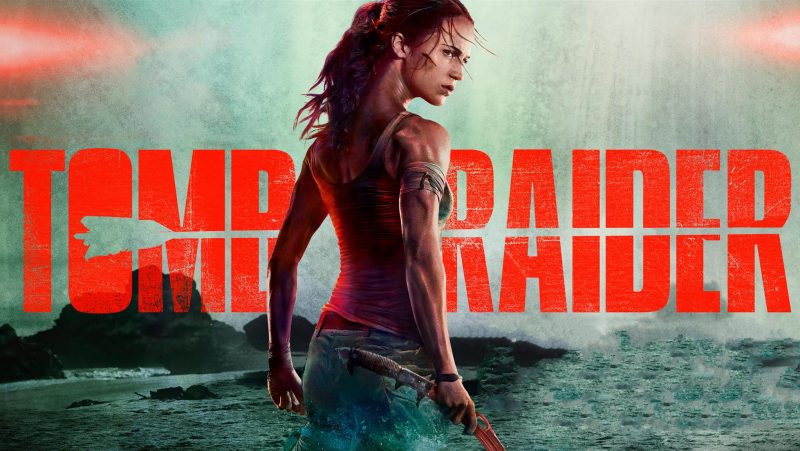
The new Tomb Raider film – starring, of course, young archaeologist Lara Croft – could have seemed (ahem) entombed to failure. This game-to-cinema franchise hasn’t been dug up (see what we did there?) for a while, and understandably so, considering how the only two other instalments shaped up. The Angelina Jolie films of the Noughties were basically all hype and no trousers, skimpy or otherwise. It wasn’t long before HMV bargain bins across the country hoovered up DVD copies of both films like quicksand that their lead character would usually be eager to jump straight across.

With the 21st century having seen Christopher Nolan and Daniel Craig help to modernise respectively the previously campy Batman and Bond franchises with more grit, the time did seem ripe for Tomb Raider to get the same treatment. This film’s Lara isn’t the same as the one that adorned bottles of Lucozade in the 1990s; it’s the more intellectually stimulating Croft of the critically acclaimed 2013 reboot of the game series. Presumably in line with this more down-to-earth approach, the filmmakers have jettisoned Brad Pitt’s ex in favour of young Academy Award winner Alicia Vikander.

As you would expect from an Oscar winner, the Swedish actress certainly shows her acting chops in portraying an in-depth personality for Lara. In a Batman Begins-style origin story, Lara is scrimping and saving in London while struggling to believe the news that her archaeologist father Lord Richard Croft, played in flashbacks with charming paternal affection by The Wire’s Dominic West, has supposedly died during an adventure abroad. Lara’s disbelief leads her to head off to try to find him.

There’s no doubt that Vikander has physically thrown herself into the role. Some of the more intense action set-pieces, including Lara’s near-death escapes from first a rollicking boat and then a discarded and disintegrating plane, feel like Terminator action scenes seamlessly transplanted into a jungle realm. Norwegian director Roar Uthaug also throws in some light relief courtesy of Nick Frost as a wisecracking pawn shop owner. Walton Goggins’ villain – Mathias Vogel, an archaeologist rival of Lara’s father – is one of the less effective characters, being something of a charisma vacuum.

Nonetheless, it’s refreshing to see so many elements that firmly ground the story in reality. You shouldn’t expect the excessive silliness that plagued the National Treasure films – and, unlike them, this Tomb Raider outing gets a more immediately likeable lead than a wooden Nicolas Cage. This particular film probably still isn’t original enough to warrant the sequel it blatantly teases; however, given that the archaeologist adventure genre can feel old like the relics for which Lara hunts, it remains perhaps as solid a cinematic Tomb Raider reboot as we are likely to get right now.


Film review: Black Panther

Rating: *****

As you might have gathered from much of the fervoured press chatter, the 18th film from Marvel Studios – described in turn as “a self-contained marvel”, “a superhero movie with serious muscle and style” and “a superb genre film – and quite a bit more” – is, well, not just about finally giving a black comic-book star a film of his own.

In any case, the latter titbit is far from true, that honour having long gone to 1997’s Spawn, a year ahead of Wesley Snipes’ Blade. Indeed, Snipes himself signalled as far back as 1992 his intention to work on a Black Panther film, only for the momentum behind such a project to not start gathering steam until the mid-2000s.

In the meantime, the Afrofuturism into which Black Panther heavily leans – which can be very roughly defined as an approach to science fiction and fantasy grounded in African cultures and the black experience – has continued to thrive in music through such acts as Janelle Monae, Willow Smith and Kanye West.

Now, film finally has its big-blockbuster Afrofuturist standard-holder – and many observers are wondering why it took so long for a studio to take on the task.

A convention-buckling Coogler epic

There are many more descriptors that one can apply to Black Panther – family saga, espionage thriller or simply another classic in the pantheon of Marvel superhero movies that will giddily excite overgrown and actual 10-year-olds alike. So much of this is attributable to director Ryan Coogler’s already well-honed instinct for the ambitious, audacious and pyrotechnically spellbinding, despite this being only his third film.

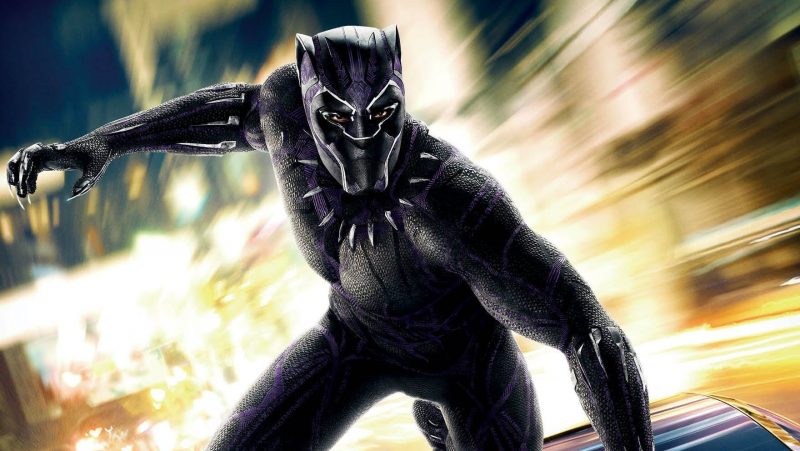
For the benefit of those of you who aren’t Marvel dweebs, it all centres on the tale of Black Panther himself – real name T’Challa (Chadwick Boseman) – who is officially crowned as the king and super-powered protector of the secretive techtropolis of Wakanda after his father’s death.

Boseman is joined in a predominantly black ensemble by such talent as Michael B. Jordan – who plays the improbably buff challenger for T’Challa’s throne, Erik “Killmonger” Stevens – and Lupita Nyong’o, whose turn as T’Challa’s former lover and an undercover spy for Wakanda undertaking missions in other countries sees her treated to some of the film’s wittiest lines.

Another major threat to the kingdom comes in the form of the brawny arms dealer speaking in a spicy Afrikaner bark, Ulysses Klaue (Andy Serkis), who has his sights trained on Wakanda’s vast deposits of an indestructible metal known as vibranium.

Not just another Marvel juggernaut

Of course, for all of its cultural significance and political nuances, Black Panther remains a big-budget Marvel film, with almost everything that entails – but not quite.

Yes, the third act couldn’t be more Marvel at its heart if it tried – a big, noisy CGI climax. But the moral and political questions that Black Panther contemplates aren’t touched on in the haphazard or peripheral manner that seems the case even with the Dark Knight trilogy or the X-Men franchise.

Instead, they are very much central to its architecture, providing a thought-provoking narrative seam from the first scene to the last – even if you may also simply be having too much fun to notice.

Film ReVue: Allegiant

Vue Cinema’s Ivan Davison shares his thoughts on the latest film release…

By Ivan Davison.

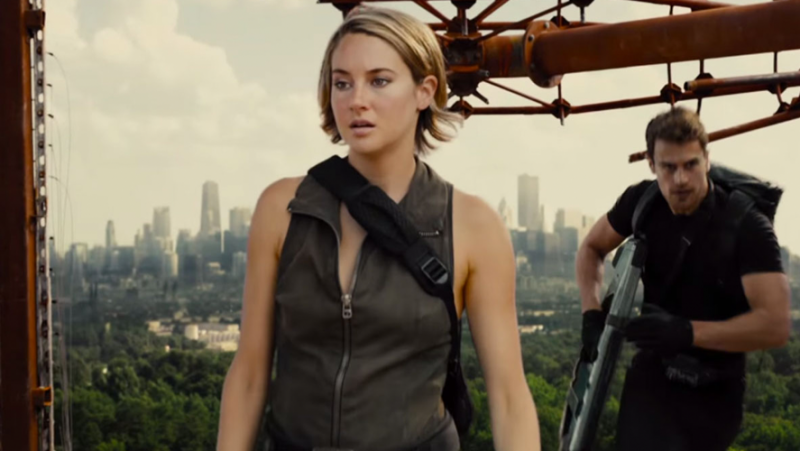
The latest and third instalment of the popular YA series Divergent, Allegiant, continues to follow the struggles of Tris (Shailene Woodley), Four (Theo James) and their group of genetically modified Divergents as they survive during a power struggle between various conflicting factions in a post apocalyptic Chicago. This film, unlike the previous sequel, quickly finds the group escaping and venturing into a new & unexplored territory, namely a scorched earth located outside the boundaries of their city, known as The Fringe.

Whilst here they encounter an advanced society, named the Bureau of Genetic Welfare, led by the enigmatic David (Jeff Daniels). The society’s goal is to end the conflicts happening in Chicago and work towards rebuilding the world to what it that once was, and they see Tris as their best chance at leading them into the new future they propose. However as Four delves deeper into the workings and methods of the Bureau, he discovers that their intentions may not be as peaceful and well intentioned as they are leading others to believe.

Meanwhile the conflict in Chicago escalates when Johanna (Octavia Spencer) forms her own faction, named the Allegiant, in order to try and usurp the previous films antagonist and Four’s tyrannical mother, Evelyn (Naomi Watts).

allegbody2

The film makes the wise decision early on to show the group entering new landscapes and situations, which gives the film a much more epic scale, and allows for some stunning visuals of the Fringe (which is very reminiscent of last year’s surprise breakout hit, Mad Max:Fury Road) as well as the Bureau’s headquarters, Providence. It also leads the plot to explore more of the world in which these characters inhabit more than previous instalments did, and explores bigger themes and more complicated concepts than just the conflict happening in their home city.

The two leads develop their relationship throughout the film, continuing to build on the excellent chemistry they have with each other, and its interesting to see that relationship strained at certain times due to David’s influence on Tris and Four’s weariness of his agenda, with both actors giving convincing performances. The film’s best performance by far however, comes from Miles Teller who plays Peter, as he injects such much needed humour into the film, whilst also giving his character an dark undertone in the second and third act that will hopefully be utilised in the next film in the franchise. Jeff Daniels also shines as the film’s newest antagonist, playing David as a trustworthy father figure rather than a monster, and his knowledge of Tris’ past gives her the much needed backstory she needs, as well as creating a multi-layered character that is can be both sympathetic and menacing in equal measure.

Fans who have followed the series may find themselves a little tried by the lack of action scenes compared to the previous two films in the series, but the amount of plot development, foreshadowing and build up will certainly mean that the next and final instalment of the franchise, Ascendant (due out next June) certainly will excite and entice those awaiting the final battle between the factions, and the addition of the Bureau into the mix adds a new layer of danger and intrigue to the coming war in Chicago. Its safe to say the all out war in the finale will be something viewers will be salivating to see.

Our Allegiant review was written by Vue Cinema’s Oliver Cobb. For more information on the latest cinema releases, or to book tickets, visit www.myvue.com.

Click here to book tickets for Allegiant.

Film ReVue: 10 Cloverfield Lane

“Crazy is building your arc when the flood has already come…”

clovbody3

By Oliver Cobb.

From director Dan Trachtenberg (Kickin’, Portal: No Escape) and producer J.J. Abrams (Star Wars Episode VII: The Force Awakens) comes 10 Cloverfield Lane, a ‘spiritual successor’ to 2008’s monster-thriller Cloverfield. While you’d not be crazy to think this a direct sequel, Trachtenberg takes a very different approach to filmmaking and storytelling to bring us a movie that is both unrelated and far superior to its predecessor.

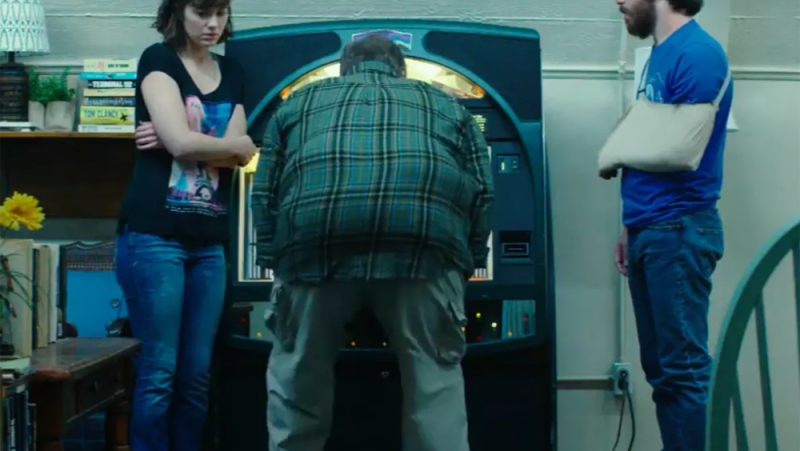
After walking out on her, presumed, fiancée, Michelle (Mary Elizabeth Winstead) finds herself in a car crash heading west of her home in New Orleans. Waking up chained in a dingy basement room, Michelle discovers that she has been rescued from a terrible apocalyptic attack on planet Earth. Her captor Howard (John Goodman), who has spent years preparing for such an event, assures her safety from the ‘poisonous’ air above in his fallout bunker. Along with Emmett (John Gallagher Jr.) the three must learn to survive in close quarters with a limited supply of food, air and water. But all is not quite as it seems, when Michelle and Emmett become leery of Howard’s suspicious past. Suspense and uncertainty ensue as we discover the truth in this gripping, claustrophobic feature.

clovbody2

Perhaps the finest moments of drama and tension in this movie come from John Goodman, whose character Howard is mysterious and frightening. With almost no warning, the atmosphere of a scene can change from light-hearted and uplifting to devastatingly terrifying; Goodman’s abounding voice and eerie presence lend to the uneasiness of 10 Cloverfield Lane, and as his intentions are slowly uncovered the audience shares with his captees a sense of dread. At their first meal at the table, we experience Howard’s hot temper, which Goodman delivers effortlessly yet convincingly. Winstead and Gallagher are solid in this acting threesome. Despite its small ensemble, 10 Cloverfield Lane captures moments of genuine emotion, as is the case in a scene with Michelle and Emmett discussing his troubled past. Something Trachtenberg does so masterfully is convey the human condition, and although there are moments of cinema-screenplay-tropes they are outshined by the outstanding acting in this movie.

Stylistically, 10 Cloverfield Lane is simple yet effective. Taking place almost entirely in Howard’s safe house, cinematography is convincingly claustrophobic. Despite its homely facade, the bunker is a prison that’s prisoners would risk certain death to escape. In a scene where Michelle climbs through an air vent to fix the filtration system, we are reminded of the characters’ isolation as she looks longingly through a window to the outside world. Trachtenberg brilliantly evokes that sense of entrapment that frightens and worries his audience.

clovbody1

Thinking about the tag line ‘Monsters Come in Many Forms’, it becomes clear that Trachtenberg is uninterested in the ‘real monsters’ of 2008’s Cloverfield. Conversely, the monsters in 10 Cloverfield Lane are found in the inhumanity of its characters, and in the imaginations of its audience. With a comparatively low budget of $15m, Trachtenberg shows how much he can do with so little. In fact, 10 Cloverfield Lane’s strengths are in its cinematic simplicity, making it one of the strongest releases of 2016 thus far.

Regrettably, Trachtenberg has not received the same PR limelight that producer Abrams has. Whose name is at the top of the poster? You guessed it. A little film called Star Wars may have had something to do with that.

Our 10 Cloverfield Lane review was written by Vue Cinema’s Oliver Cobb. For more information on the latest cinema releases, or to book tickets, visit www.myvue.com.

Click here to book tickets for 10 Cloverfield Lane.

Film ReVue: Steve Jobs

Vue Cinema’s Gary Prior shares his thoughts on Danny Boyle’s big-screen character study of the man himself, Steve Jobs…

“How come, ten times in a day, I read ‘Steve Jobs is a genius’? What do you do?”

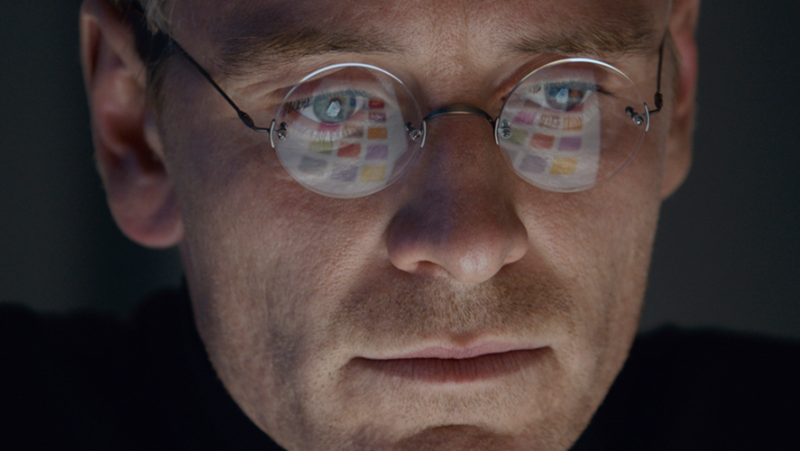
Based on the book by Walter Isaacson, Director Danny Boyle and Screenwriter Aaron Sorkin bring an interesting, dialogue-driven movie that explores Apple’s co-founder, visionary and entrepreneur: Steve Jobs.

Beginning in 1984 and concluding in 1998, the film is set around three major product launches (Apple Macintosh, the NeXT Computer, and the iMac), and takes us behind the scenes to hear conversations held by Steve Jobs, and focuses on the relationships with his daughter and key Apple figures, including co-founder Steve Wozniak (Seth Rogen).


The interesting thing about Steve Jobs is that it doesn’t follow the standard biopic formula. Most would follow the ‘greatest hits’ of the subject’s life, but this steers clear of the obvious milestones, and instead focuses on a look at how Jobs’ mind worked. In that sense, it’s less a biopic and more of a character study.

Every actor brings their A-game to this movie. Starting from the top, Michael Fassbender as Jobs himself doesn’t disappoint, and the role perfectly highlights his versatility as an actor. You really get a feel for how passionate Jobs was about the technology he was attached to, and how indifferent he was to the opinions of those he worked with.

With supporting roles from Kate Winslet, Seth Rogen, Jeff Daniels, Katherine Waterston and Michael Stuhlbarg, the film feels like a masterclass in acting. It’s not surprising that there’s Oscar buzz.

Even though Steve Jobs is dialogue based, it deserves credit for how much pace and energy it has. A dialogue heavy movie can often be hard work to sit through, but thanks to the brilliant writing of Sorkin, noted for The West Wing and The Social Network, and the directing style of Boyle – Slumdog Millionaire, 28 Days Later – this holds up as exciting throughout. The confidence they had to bring this version of Jobs to the screen should be applauded, and not unfairly criticised for not sticking to the traditional biopic formula.


Famous for his unique writing style, Sorkin employs his usual intense and emotional dialogue, while retaining with and a very real human element. Meanwhile, Boyle shoots each of the three product launches in different formats (16mm, 35mm, and digital), making it feels as though we’re moving closer to Jobs’ final technological vision with each passing scene.

It’s a shame this movie hasn’t received much commercial success or positive feedback in the US, but if you’re even mildly curious in the man behind our beloved Apple products, it’s worth checking out before it’s off the big screen.

Our Steve Jobs review was written by Vue Cinema’s Gary Prior. For more information on the latest cinema releases, or to book tickets, visit www.myvue.com.

Click here to book tickets for Steve Jobs.

Film ReVue: The Good Dinosaur

Vue Cinema’s Ivan Davison shares his thoughts on Pixar’s pre-historic family offering…

With its latest animated film, Pixar has continued their winning format. It’s one that combines staggeringly impressive CGI visuals, family friendly humour, and a heartfelt coming-of-age story for all ages to enjoy.

Following on the heels of one of this summer’s biggest blockbusters, Jurassic World, Pixar has dipped its toes into the world of prehistoric creatures. After setting the bar (extremely) high with July’s Inside Out, the team behind The Good Dinosaur have crafted a story that’s simpler than its predecessor, but no less enjoyable.

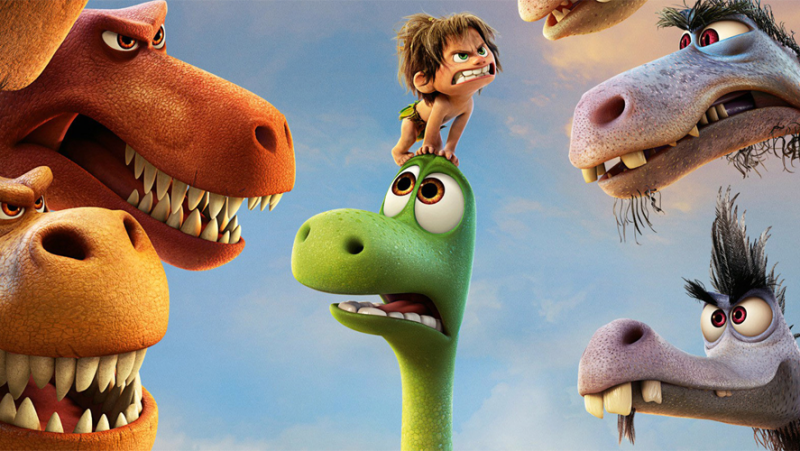
The film is set in an alternate timeline, in which the fateful meteor has missed earth completely, leaving the dinosaurs to roam free. Skip ahead a few million years, and we meet Arlo, an Apatosaur, who lives with his family on a mountain range farm.

Arlo, the smallest of his three siblings, struggles to find his place in the family’s dynamic, but finds an unlikely friendship with a young caveboy. What follows is a fast paced, but heartwarming tale of mutual dependance, complimented by vast and stunning landscapes.


A cast of loveable and memorable characters is brought to life by some terrific voice performances, the highlight being Sam Elliot’s role as father to a group of Tyrannosaurus Rex’s. His grizzled cowboy twang lends itself perfectly to the role, and one of the film’s most heart-wrenching moments comes as he shares his own sombre tale.

But The Good Dinosaur’s greatest strength comes from its stunning visuals. The world on screen is rendered in such a photo-realistic way that it becomes hard to comprehend just how far Pixar’s technologies have come since they first captured our imaginations with Toy Story. The landscape is enormous, and even a host of dinosaurs appear small and out of their element in such fully-formed openness.

While not as complex a concept as Inside Out, The Good Dinosaur sees Pixar still on fine form, and uses its simplicity to tell a story of friendship, family, adventure and loss that we can all relate to.

As is common with Pixar’s releases, a short animated film plays before the main feature, and this time we’re treated to Sanjay’s Super Team. I recommend heading to the cinema early to catch it. Although very different from Pixar’s usual output, it’s perhaps one of the most personal and original Pixar shorts we’ve ever seen.


Our The Good Dinosaur review was written by Vue Cinema’s Ivan Davison. For more information on the latest cinema releases, or to book tickets, visit www.myvue.com.

Click here to book tickets for The Good Dinosaur.


[cwa id=’test’]

Film ReVue: Bridge Of Spies

Vue Cinema’s Olly Cobb shares his thoughts on Steven Spielberg’s new Cold War drama, starring Tom Hanks and Mark Rylance…

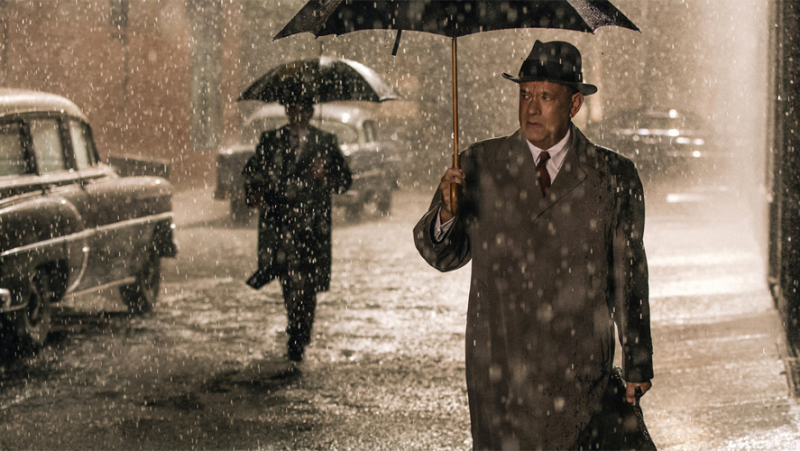
Based on true events, Bridge of Spies follows the trial of Rudolf Abel (Mark Rylance), a Soviet spy captured working in New York in 1957. Main protagonist James Donovan (Tom Hanks) is the American councillor tasked with defending Abel, but finds himself caught in the midst of the Cold War.

As is to be expected from ‘Triple-A’ blockbuster titles, Bridge of Spies delivers a believable and accurate window to the past. Scenes set on the Brooklyn streets (and later in East Berlin) are astonishing, and the 1950s attire and deco is wonderfully nostalgic.

Spielberg has tried (and succeeded) to place his characters into an immersive world, but it does – on occasion – only serve to distract from the moments when the script falls flat.

Spielberg’s actors, however, aren’t quite as perfect as his world. Tom Hanks delivers a convincing performance, and proves yet again that he’s an extremely competent actor, but perhaps past his best. Here we have yet another Spielberg movie in which Hanks’ character is the black sheep.


Thankfully, Rylance’s performance is extremely refreshing. When Abel is incarcerated, he is asked why he isn’t alarmed by the prospect of the death penalty, to which Abel simply replies “Would it help?”

The supporting cast is solid, but there is a lack of development seen in Donovan’s family and peers, especially his wife who appears frequently but is uninteresting. The American authorities in this movie (in particular the C.I.A) seem to be the standard impatient, patriotic men who fit the ‘Cold War Criteria’ nicely.

As for moments of intense drama, there’s a light spattering. The courtroom scenes are brief and tedious, but excitement kicks in as Hanks makes his way through East Berlin. It’s engaging and beautiful, and the climactic exchange on the Glienicke Bridge is a superb, well-crafted cinematic moment. It’s just a shame that there weren’t more scenes like this.


Suffice to say that Bridge of Spies is visually fantastic, and there are moments of excellence from its leading actors, but these days watching a Spielberg movie is a lot like going to a museum. You don’t necessarily go for the thrill, but for the experience. Bridge of Spies falls into the same trap as 2012’s Lincoln, in that a predictable plot hides behind beautiful set design and a star-studded cast.

We can forgive it for not being particularly rewarding, but one hopes for Spielberg’s return to making less ‘grown up’ movies. Nevertheless, the Academy will likely try to give Bridge of Spies an Oscar, to which I ask… would it help?


Our Bridge of Spies review was written by Vue Cinema’s Olly Cobb. For more information on the latest cinema releases, or to book tickets, visit www.myvue.com.

Click here to book tickets for Bridge of Spies.


[cwa id=’test’]

ADVERTISERS